 krnaturalphoto's Blog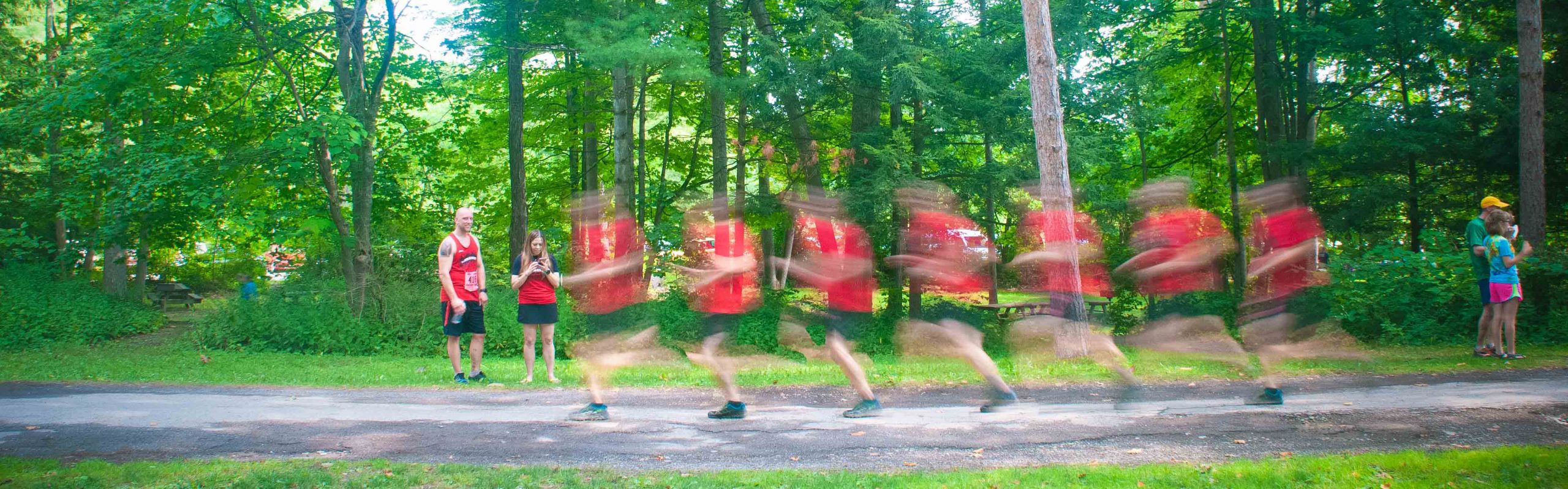
Pied-billed Grebes are small duck like birds.
They are often found swimming around on ponds or lakes.
For me the Pied-billed Grebe is a difficult bird to photograph a lot of the time.
I don’t use really long telephoto lenses and the Pied-billed Grebe is small and often stays at a distance.
But they are a fun and challenging bird to photograph and it creates a good way to work on my craft.
Looking to find those moments that work.
Always be ready. the Pied-billed Grebe is always in motion.
Swimming, diving, then popping back up in a random place in the water. That random place might be right next to you. So be ready to capture that shot.
It was cool to have the opportunity to capture this image of a Pied-billed Grebe taking off from the pond at Montezuma National Wildlife Refuge.
Photo details: Nikon D500. Nikon 300mm f/4. Focal length 420mm. ISO 400. 1/5000 sec. f/5.6.

Share this:

I love to try new things and on this day I got a twofer. I put snowshoes on my feet for the first time ever. And then I went and ran a 5k wearing said snowshoes.
I don’t know if I would have participated in this event otherwise, but I made a commitment to myself to run all the events in the Finger Lakes Running Club trail series and the Super Frosty Loomis Snowshoe Race is part of that trail series so I was committed to doing it. And I am glad I did. It was something fun and new.
Trying something totally new
I am always up for a challenge and this was such a unique challenge for me. So many variables and aspects to this event that I had no experience with and that I had no idea how they would impact my running. I am not a fast runner but I am pretty experienced on trails so I have a good sense of how I will perform given a particular course distance and elevation. At very least I have a sense of how much exertion will be required for me to run a race.
I am not a graceful runner. I do not have an ideal stride. Sometimes my feet even make contact with the opposite leg as I move through my stride. And I have huge feet. I though all of these factors might lead up to some very complex and eventful snowshoe running. Add more size and volume to my ungainly and chaotic stride and I was pretty sure I would fall at least once.
I managed to have a few friends join me for the race. We were all really excited. We made sure to get to the race nice and early. I wanted to have time to get those snowshoes on my feet and practice in them before the race. After getting my snowshoes on and adjusted I was able to get a miles worth of walking and running in them before it was time to get ready for the race. I was feeling ok about it. But I did learn by nearly falling over that snowshoes are not made for going backwards. I made some last minute adjustments to the fit of my snowshoes.
Running a snowshoe race
When the clock finished counting down we were off and the race was underway. There were a good number of people who clearly knew what they were doing and pulled away from the pack quickly. I was not one of them. I am not a pulls away from the pack kind of guy on the best of my days. And especially not so in snow with snowshoes on.
The beginning of the course was uphill. It wasn’t long before I found myself power hiking up the trails. Just trying to stay connected to the group of runners I found myself with.
The biggest challenges of the race were figuring out both how to run in the snow and how to best stride with the snowshoes to make best use of them. Running in the snow, even though it was somewhat packed down most of the way was similar to running on sand. That is if the sand might suddenly drop off unexpectedly on one side and you sink into it about a foot. Follow the leader was the name of the game. See where the previous runners were finding the best traction. Try not to get stuck in someone else’s sink hole.
So running on a lose surface added an extra level of exertion required to gain momentum and keep moving. And that is a lot of fun going up hill you know.
Adjusting to snowshoes
Then there was trying to compensate for the added weight of the snowshoes. I wouldn’t call the snowshoes I was using heavy but it was at very least like doubling the weight of your normal shoes. Imagine trying to run with an oversized pair of sandals or flip flops on. Especially for the back end of the snowshoes they reacted just like a flip flop. Fortunately the FLRC offered snow shoe rentals and I took advantage of that because I didn’t have snowshoes of my own. And that definitely worked out to my advantage because the snowshoes that FLRC provided were much smaller and lighter looking than standard snowshoes used for just walking on the snow.
I felt a little more comfortable in the snowshoes on sections of trail that were relatively flat. Where I really liked the snowshoes was on the downhills. The snowshoes had these large metal claws underneath aligned with the ball of the foot for traction. This was perfect for downhill running. I was able to open up much more on the downhills than I would have expected given the amount of snow there was. It wasn’t fast by any means because I was already exhausted but it felt so much better and more comfortable to run the downhills in the snowshoes.
Snowshoes vs. dirt trails
It is always hard to compare times and distances for a trail race because terrain and elevation makes such a big difference, but if I wasn’t significantly slower I sure felt slower in the snow with snowshoes. I felt like I was working a lot harder than I would have expected to be given the terrain at any point along the race. I was more tired than I would have been for the pace I finished with and the elevation profile of the course had it been regular dirt trails. So if you had any doubt snow shoe running is harder than regular trail running. I think seeing the finishing times of the race winners confirms that as well.
I would like to go back out and se how it feels without the snow to truly compare.
Share this:

Horned Grebes are birds that migrate through my area in the early spring.
When you see Horned Grebes you can easily tell the males and females apart. Their coloration is different. At least during the spring migration.
Male Horned Grebes are darker overall, especially on their head and necks and the males have a bright swash of bright color that is the “horn” they are names for.
Female Horned Grebes are not as colorful. Their feathers are more drab. But that makes the most distinct feature of these birds stand out even more.
Both male and female Horned Grebes have bright red eyes.
Due to the lack of other color on the plumage of a female Horned Grebe the red eye stands out more and really draws attention.
Photo details: Nikon D300S. Nikon 300mm f/4. Focal length 420mm. ISO 400. 1/500 sec. f/5.6.

Share this:

Greater Yellow-Legs are medium sized wading birds that can be seen in the area of upstate New York where I live.
Watching Greater Yellow-Legs is fun because they are larger than small wading birds like sandpipers. And Greater Yellow-Legs move around more than larger wading birds like great blue heron.
Having a medium sized shorebird that moves around regularly is good for wildlife photography.
A subject that is relatively easy to see is good for obvious reasons. And having a subject in the Greater Yellow-Legs that moves around more allows for a wider variety of photographs to be created during any one sighting of a Greater Yellow-Legs.
I was able to create a series of Greater Yellow-Legs photos when I saw this specimen below at Montezuma National Wildlife Refuge in New York.
Photo details: Nikon D500. Nikon 300mm f/4. Focal length 420. ISO 400. 1/2000 sec. f/5.6.

Share this:

I am a fan of trying to find appreciation for things other might not appreciate, especially when it comes to nature.
The much maligned Canada Geese are a perfect example of that.
There probably are not many other birds especially in my area that are more complained about.
Canada Geese are actually beautiful and majestic birds.
We just lose sight of that. Canada Geese have become so commonplace that we think of them as disposable or unimportant. Not worth our time.
But please, take some time. Just a few moments to look into the eyes of the Canada Geese and see their beauty.
See them for the wonderful living creature that they are.
And especially as photographers think of their omnipresence as a blessing not a curse. You now have ever present photography subjects.
Subjects that are often not going to try to evade you. Subjects that will move right into the perfect view for your camera.
There is so much to be learned from taking photographs of the omnipresent Canada Geese.
Canada Geese are beautiful subjects for wildlife portraiture.
Photo details: Nikon D500. Nikon 300mm f/4. Focal length 420mm. ISO 400. 1/640 sec. f/5.6.

Share this:

I mentioned previously that there is only one species of Egrets we see right where I live.
That species is the Great Egret.
I am fortunate that we have a few different options for finding wading birds like Great Egrets where I live.
One such option is along the Chemung River.
The river is often not particularly deep. So Great Egrets can be seen at almost any point from one shoreline to the opposite bank on the Chemung River.
The Great Egrets seem to be showing up with increasing frequency along the Chemung River.
Hopefully that means I will have even more opportunities to photograph the Great Egrets that frequent our area.
Photo info: Nikon D500. Nikon 300mm f/4. Focal length 420. ISO 400. 1/1600 sec. f/5.6.

Share this:


It feels so good to have such a long lived dog in our home. We’ve only shared our lives with one other dog for this long and only one other dog We’ve had has lived to be the same age as Mojo. They both had Husky blood.
Mojo has been a presence in our lives for 14 years. And that is exactly how I would describe his involvement in our lives. He’s never been a particularly friendly or social dog. He’s much more aloof.


And when I look at the definition of aloof I think it particular suits him. Not friendly or forthcoming. Nope. Mojo is not running up to you to day hi. Cool and distant. Check. Mojo isn’t giving you slobbery dog kisses. Conspicuously uninvolved and uninterested. Check and check. Mojo doesn’t really care what the humans or even other dogs are up to. Most often Mojo is in an otherwise unoccupied room. And if we enter his room he most likely will depart shortly thereafter.
If Mojo decides to share a room with his housemates it’s I’d generally from a distance. Often curled on a dig bed or in the corner. Never paying any attention to us.


Mojo has always lived in his own little world. That world often includes hanging out outside despite our attempts to get him to come in the house. Pouring rain, freezing cold, snowstorms. All of them are reasonably more comfortable for Mojo than human interaction. Honestly I can’t say I blame him.
As Mojo has gotten older it has become noticeable in some ways. He recently seems to have become very hard of hearing and possibly have some vision issues as well.


The only positive to come of Mojos aging is that as his senses decline he seems to come to us for reassurance more frequently. Mojo will approach for petting and scratches more often and stay for longer. He will even sit with us on the furniture. We’ll not really with us but nearby.
Mojo has also developed a fondness for a few stuffed animal dog toys. He never used to play with any toys. But now he can often be seen carrying a toy with him to wherever he is going to lay down. He even actively engages I’m playing with them. Squeaking them over and over at times. Something he never used to do.
So hopefully we have many more years of loving cohabitation with our stranger dog Mojo.
Thank you for stopping by the blog today. I hope you enjoyed the little update on our dog Mojo.
You can see another photo of Mojo as well as the other dogs that have lived with us in this gallery, Our Dogs.


Share this:

It is always exciting to get out and visit a new location.
I don’t usually do any research in advance of a visit to a new place to see what I might find there.
I like to be surprised. The excitement of seeing something new and unexpected is part of what I find so fun.
If you see a new bird. Do you know what it is. Are you familiar with it. Or is it something completely new that you were not even aware existed.
Egrets in the region of the Untied States where I live come in three varieties. However, wher eI live we usualy only see one species of egrets.
So it was so cool to see one in person when I visited For Mott State Park in New Jersey.
The Cattle Egret is not the species of egret that I can see where I live.
The most distinguishable among the varieties of egrets is their size.
The Cattle Egret is a relatively small Egret.
Photo info: Nikon D300S. Nikon 300mm f/4. Focal length 420mm. ISO 400. 1/3200 sec. f/5.6.

Share this:

The Wood Duck is a bit smaller than the more common duck the Mallard.
Wood Ducks are a brightly colored beautiful bird in the male ducks of the species. This is probably the way one most often sees them photographed.
I often like the more subtle colors in birds. The female wood duck is a beautiful more subtle shade of colors.
In my recent photography adventures with the Wood Duck I was able to photograph a male Wood Duck during the fall.
In the fall the Wood Duck is in its non-breeding or eclipse plumage. So this time of year the male Wood Duck does not have as bold a coloration as it does during the breeding season.
Photo details: Nikon D500. Nikon 300mm f/4. Focal length 420. ISO 400. 1/2500 sec. f/5.6.

Share this:

The Ruddy Duck is one of the variety of birds I often look for during spring migration.
I try to stop at one of our local parks that features a pond regularly looking for migrating birds in the early spring.
Some days are better than others. Sometimes I don’t see any migratory birds passing through. Other days I am treated to a wide variety of migrating birds al in one visit.
It seems that in the last couple years I have not seen as many migratory birds at this particular location.
But the Ruddy Duck is one I have seen on multiple occasions.
The Ruddy Duck is a small bird. And the Ruddy Duck can be easy to miss, not just due to its size, but also because it is a diving duck.
Ruddy Ducks dive underwater to search for food. So if you just give the water a quick scan and then move on you may miss them. It is definitely worth sticking around a few extra minutes to see if a Ruddy Duck pops back up to the surface while you are there.
Photo details: Nikon D300S. Nikon 300mm f/4. Focal length 420mm. ISO 400. 1/640 sec. f/5.6.

