 krnaturalphoto's Blog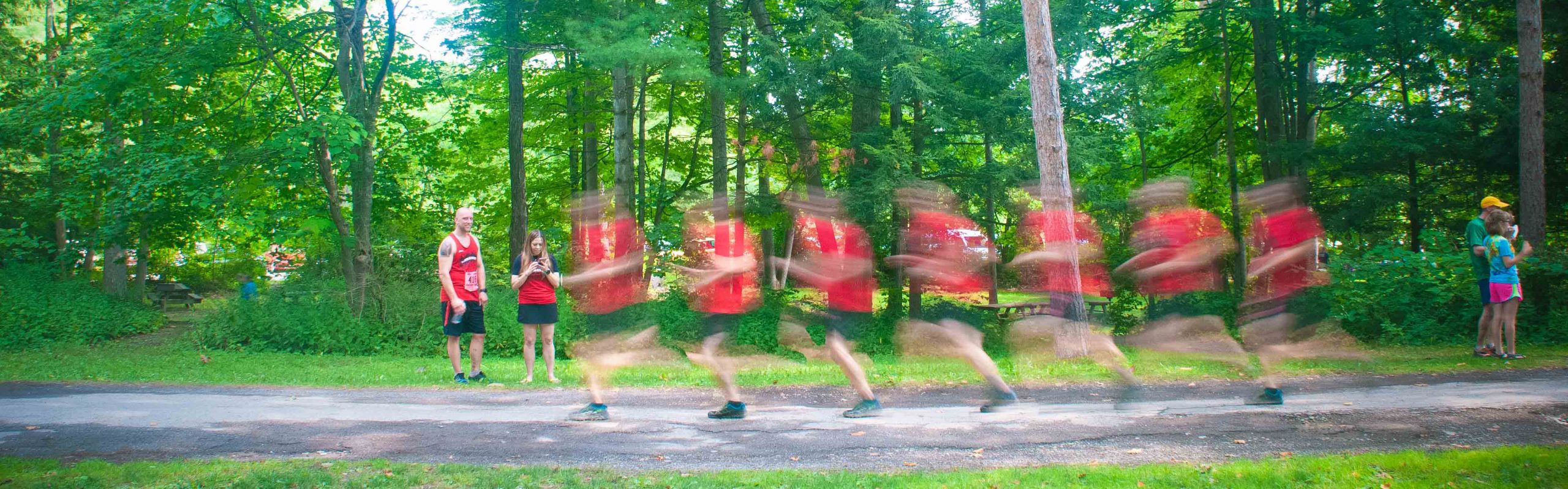

“What do we mean when we say that first of all we seek liberty? I often wonder whether we do not rest our hopes too much upon constitutions, upon laws, and upon courts. These are false hopes; believe me, these are false hopes. Liberty lies in the hearts of men and women; when it dies there, no constitution, no law, no court can save it; no constitution, no law, no court can even do much to help it. While it lies there, it needs no constitution, no law, no court to save it. And what is this liberty which must lie in the hearts of men and women? It is not the ruthless, the unbridled will; it is not freedom to do as one likes. That is the denial of liberty, and leads straight to its overthrow. A society in which men recognize no check upon their freedom soon becomes a society where freedom is the possession of only a savage few—as we have learned to our sorrow.
What then is the spirit of liberty? I cannot define it; I can only tell you my own faith. The spirit of liberty is the spirit which is not too sure that it is right; the spirit of liberty is the spirit which seeks to understand the minds of other men and women; the spirit of liberty is the spirit which weighs their interest alongside its own without bias; the spirit of liberty remembers that not even a sparrow falls to earth unheeded; the spirit of liberty is the spirit of him who, near two thousand years ago, taught mankind that lesson it has never learned, but has never quite forgotten—that there may be a kingdom where the least shall be heard and considered side-by-side with the greatest.”
– Learned Hand

If you enjoyed this image check out this photograph of one of the waterfalls at Buttermilk Falls State Park during autumn: Buttermilk Falls.
If you enjoyed this article you can click the link below to support the work I do here or subscribe to my email so you don’t miss out in anything I share.
Share this:


I have been wanting to put on an ultra distance style vent for a long time. I have been thinking and noodling about ideas for years and years. I once mapped out how far it would be to run around the entire finger lakes region.
I have been involved in just about every aspect of racing over the years. Runner, photographer, course set up and take down, aid stations, cheering, registration, packet pick up. you name it and I have probably done it. But I have never been the one to developed the idea from top to bottom and put on the event. Dream it up and make it a reality. And I am so thankful to have been given that opportunity by the Southern Tier Running Club.

Share this:


I made my first trip back to Watkins Glen State Park since the lower portion of the gorge trail, arguably the most epic part, was reopened after the completion of the new Sentry Bridge. The old bridge had fallen into disrepair and become unsafe. I am glad that it was repaired so we can continue to enjoy this park. The only thing I will say about the new bridge itself is that most people who are long term fans and locals dislike the bridge because it is so out of step with the ascetics of the natural beauty that is Watkins Glen State Park. The bridge is all metal where before it was stone. They did at least make some nice finishing touches with wooden railings, which look nice but are going to be splintery very soon. And they “upgraded” the railings in the cave to a cool looking wooden linked format that I cannot accurately describe, but also suspect will require more main entrance than it was worth to make that particular design choice. IE more splinters.
I was surprised that it being mid week and mis fall the park was so busy. Not packed but also not as empty as I was hoping for as a landscape photographer. But when you get lemons make lemonade as they say. So I try to play around with long exposures of people posing with the waterfalls.

Share this:


“Totalitarianism is never content to rule by external means, namely, through the state and a machinery of violence; thanks to its peculiar ideology and the role assigned to it in this apparatus of coercion, totalitarianism has discovered a means of dominating and terrorizing human beings from within.” – Hannah Arendt

If you like fall colors switch it up from a single leaf to a mountain range full of fall colors: Autumn in the Adirondack Mountains.
If you enjoyed this article you can click the link below to support the work I do here or subscribe to my email so you don’t miss out in anything I share.
Share this:


“I think sometimes our young people believe either that government is not a good thing to be involved in … or that if they did get involved, what they did wouldn’t make a difference. Nothing could be further from the truth. We are around here as a nation after more than 224 years because more than half the time, more than half the people turned out to be right on the really big issues. There is no place in the world that is a better example of what free people can do when they work together … I frankly think that a lot of this fashionable cynicism is a kind of self-indulgent arrogance that has no place in America.” – Bill Clinton, 2000

If you like this image click the link to see one of the male Evening Grosbeaks I was able to see: Evening Grosbeak
If you enjoyed this article you can click the link below to support the work I do here or subscribe to my email so you don’t miss out in anything I share.
Share this:


This has been a big change this year. Switching from training mostly for ultra marathons to training for multi sport events. Goodbye long slow runs and building up miles. Hello to short fast runs, bricks, and long rides.
It was especially tricky making this switch mid season. I had one big ultra marathons to check off in spring because eI had to defer it from last year due to injury. Missing time due to injury was one of the reasons to make this transition to multi sport. I still crave challenge and long adventures, but I needed to figure out a way to stop getting hurt.
Hopefully running fewer miles and adding more cross training into the mix will build different forms of strength and help sure up my weak areas. I do like that the triathlon training plan I found had strength training days and core work days built into it. Something that was not included in the basic run training plans I have used in the past.

While I know I SHOULD be doing strength trianing and core work and some cross trianing I am much more likely to actually do it if it shows up in bold print on my training plans and tells me exactly what to do. I didn’t hit all of those strength based workouts, but I did enough of them. And next year I hope to make it more regular.
Read MoreShare this:


“A democracy cannot exist as a permanent form of government. It can only exist until the voters discover that they can vote themselves largesse from the public treasury. From that moment on, the majority always votes for the candidates promising the most benefits from the public treasury with the result that a democracy always collapses over loose fiscal policy, always followed by a dictatorship. The average age of the world’s greatest civilizations has been 200 years. These nations have progressed through this sequence: From bondage to spiritual faith; From spiritual faith to great courage; From courage to liberty; From liberty to abundance; From abundance to selfishness; From selfishness to apathy; From apathy to dependence; From dependence back into bondage.”
― Alexander Fraser Tytler

Mountainous rock face and fall foliage in the: Adirondack Mountains.
If you enjoyed this article you can click the link below to support the work I do here or subscribe to my email so you don’t miss out in anything I share.
Share this:


I really thought trail running was my Goldilocks Zone of sport. The perfect combination of difficulty, beauty, joy, and nature. I was happiest on the trails. At Any pace or any distance. Then injuries forced me to take a different route.
I have spent much of the past 4 years unable to run pain free if I could run at all. It forced me to change and adapt. To find new joys and passions to pursue and be fulfilled by. I still love trail running. And running will always be my happiest place. But now I have so much more to be thankful for.
And I owe a lot of it to my friends who have introduced other athletic endeavors to me and invited me to join them on adventures.
_________________
I love taking on new challenges. And that is one of the things that I love about trail running in general is that depending on various factors like the weather and the trail conditions every run down a familiar trail can feel like anew adventure.
Aside from being on the road back from injury, it has been a long time since I have been at the start line and really wondered if I would be able to do it. Finish the race. Get it done. As I toed the line at the 2026 Finger Lakes Triathlon Canandaigua I had doubts.
Doubts that stemmed from being a beginner again. From being new. Seeing things for the first time. It has been a long time since I have been a beginner at anything that I really cared about. And I cared about this event. I wanted to finish. I had expectations of myself. And I wanted to accomplish my goals.
The Swim
What I did not realize is how much actual fear I had.
I am not a swimmer. This is the newest component of triathlon to me. I only began swimming in February 2026. I would have to train up to swim .9 miles for this triathlon. Which I had no idea if it was even a realistic expectation to think one could do. Go from zero yards swam to around 1800 yards.
But, I was going to find out.
I actually got comfortable in the pool after a while, especially once I could swim in the outdoor pools over the summer. I almost enjoyed swimming. I kept putting off ever doing a triathlon because eI thought I would hate swimming or it would be too hard. And now I want to make it a lifelong practice.
Despite all the time I spent in the pool. I never did make it to practicing open water swimming which was something I had wanted to do but failed to prioritize and commit to. I had heard so much about how different it is to swim in open water vs being in a pool. And now I know how real that is.

I chose this event to be my first triathlon in large part because I had heard that at least for a large part of the swim you can stop and touch the ground if you need to. What it did not prepare me fore is what happens when you pass the point of being able to touch. Once that safety net is gone what happens then?
So, for the swim essentially the whole sprint course was shallow enough to touch. And I began the swim nice and easy taking a few brief rests where I could touch so I did not get tired out too fast. But eventually it. Became time to get real. I passed the buoy for the sprint distance. I was now in uncharted water.
I started to try and get into a rhythm with my swimming. I was still hanging on tot he tail end of my wave with a free others and faster runners from the next wave catching up. I really struggled to get comfortable. I could not find my rhythm. I could not get my breathing comfortable. I kept coughing and gagging on water. I t was like nothing that I had ever experienced in the pool. The water was relatively calm. I was just nervous. And it only got worse.
As I continued to try and make it to the turn around buoy I struggled more and more. I felt like a fish out of water except I had been thrown in the deep end. My anxiety began to increase. I stopped my freestyle swim and just tried to tread water a bit and doggy paddle some so I was not at a complete stop.
There came a point where my anxiety almost overwhelmed me and I was just getting more and more scared. Scared of what I don’t know. I didn’t actually feel like I was going to drown or anything. I was just out in the water. A place I had never been. I almost quit. I looked for the safety kayaks and I almost signaled to one and told them I was done. It almost happened.
But I had to get ahold of myself mentally. Which was hard, because my normal method for that is to focus on my breathing and literally talk to myself out loud telling myself what to do and what thoughts to let go of. Which was a challenge while. Bobbing up and down in the water and trying to at least make some headway swimming.
I finally was able to regroup mentally. And that is really alll it took. I was not tired. I was not actually struggling physically. I was just afraid. And I started to think about the sign that my wife brought to our last trail race with the words “I did not come this far, to just come this far.” I came here to finish this. I trained all year for this. I sacrificed for this. I learned new skills for this. And I was not going to quit. I was going to get through this swim portion of the triathlon.

As I got around the turn around buoys and started making my way back to the shore I finally was able to find some semblance of a pattern. My stroke that I practiced all year returned. It is clear in my pace data where I was struggling and wher eI started to piece it back together and make more consistent progress.
I did get off track a little bit and had to reorient towards the correct landing spot, but it wasn’t too bad. I really got a little frustrated when I got back to the section of the course that made up the sprint course and many of the people in the back of the pack like me simply stood up and walked the rest of the way back to the shore. I am not a good swimmer and walking would have been faster, but I trained all year to swim this. Not to swim half and walk the rest. The ground was just a safety net. But also everyone else was getting farther and farther ahead of me because they were not swimming. I decided to just say fuck it and keep swimming no matter how far behind I got because that was wha it came here to do. I wasn’t here to walk in the water I was here to swim and prove that I could do it. I wasn’t not here for fast times and I knew I was going to be slow in the swim so why fight it if it meant not truly achieving the goal I had set out to accomplish. I didn’t stop swimmming until my hands were digging into the sand on my strokes. Then I walked onto the shore, one of the last people out of the water. But I did it.
I swam .9 miles after never swimming any amount of distance ever in my life and only training for 7 months.
The Bike
Whenever I thought about this triathlon and how it would go, step 1 was survive the swim. And I did that. Then I always thought that I would use the bike segment more as recovery from the swim so that I could be fresh for the run, which I hoped would be my strongest section. I was a decent biker but I had no illusions about my overall time for the triathlon given how slow my swim was so going into the race I wasn’t concerned about being fast on the bike.
Sometimes when you get into a race your mindset just shifts and goes somewhere unexpected. AS much as I was afraid during the swim. I was thrust into competitive mode during the bike segment.
I exited the transition area and got out onto the course at the same time as a couple of other racers. They quickly left me in their dust. But then came the hill I was expecting after our practice ride. I unexpectedly started to catch up to and pass people.
If you know me or have read any of my previous posts about my performance in sport you know that going uphill is my weakest link in any race. I generally do not pass anyone while climbing and generally am being passed going uphill. Hoping to get a chance to pass them back on a downhill.
After passing a few people it jusrtr made me want to push harder and catch up to more people. I wouldn’t say I was riding as hard as I could the whole time but I was riding at a pace that was effortful but sustainable for the full 24 mile course. I definitely was not taking it easy and saving it for the run.

Every time I began to catch up to people I cranked my effort level up a couple notches. I wanted to pass and not get passed back. And that is what mostly happened. A couple of times I would pass someone and they would pass me back a little while later but I would eventually put them in my review mirror permanently.
Two thirds of the way into the bike section we get this nice downhill but it is ruined by a sharp right hand turn which kills all of my momentum. And then to make things as bad as possible we start the steepest climb of the entire bike course. I slowed down so much that my Garmin watch thought that I had just entered the transition area at the end of the bike segment. I eventually got going ok, but it was the hardest work of the day. I eventually caught one guy and passed him. But that was short lived. Apparently getting passed set a fire under this mans ass. He was clearly significantly older than me and was having no part of getting passed by a young whipper snapper like me. As soon as I got by him I heard gears shifting on his bike and he passed me and I never caught back up to him during the bike section.

When I got to the section that I recognized being near the end of the bike course I did finally let off the gas a little so that I could try to recover some strength for the run. This was going to be something totally different yet again.
I am really beginning to enjoy seeing how much I can push my self on the bike during a competition. Especially because it is so different than most of the riding I enjoy doing.
The Run
In the last stretches of the bike ride the clouds began to dissipate and the sun came out. What generally may be seen as good news on the weather front for most people was not so for me. While the heat is less of an issue on the bike, it becomes a much more serious concern on the run for me.
Transitioning from the bike to the run went pretty smoothly. Not much wasted time or effort there. I am pretty happy with how all my transitions went. That was one of my biggest concerns were coming into this event being completely new to the world of multi sport this year.
My pre race goal for the run was to settle into what would be a comfortable pace on any other run and hope to get done in right around an hour. That proved to be harder than expected.
As with all my training it took a bit for my legs to adjust tot he change from biking to running. But once they did I felt pretty good. I was able to run smoothly for most of the first 5k loop of the run segment. Just trying to pace myself and not get too worn out on the first loop.
The run starts off by crossing the road and leaving the lakeshore area to run the paths and trails through a nice scenic little wetland area. It was a nice change of pace, but I could feel the heat building.
After completing that section I was surprised to find that the main road through that part of town was closed and we would be running right on the steamy hot blacktop. Prior to the event I had been imagining that we would run down the walking path through the park right along the lake shore. And I was looking forward to the cool breezes that would hopefully bring. But that was not to be the case.
As I neared the junction where runners either turned to go towards the finish line or start their second lap I joked with the volunteers there that we should just be able to finish now. The volunteers at this event were all awesome. Supper helpful and upbeat. Especially the kids helping with water stations.
Starting the second loop was tough. The wetland area was holding in all the heat and humidity. I began a run walk strategy. Just trying to keep a decent pace while keeping myself from overheating and ending up walking all the rest of the way.

I was happy at least that there were still more runners on the course than I expected while I was running. I thought with my slow swim time I would potentially be all alone on the run course as well. I didn’t even mind being passed be a few people. Espciellay since with the Triathlon markings on them telling me their ages I could totally justify getting passed by them because they were significantly younger than me. Andd probably not also doing their first triathlon. lol.
I was getting hotter and hotter. And the black Tri suit was not helping. Thankfully it was ultra thin, but it was absorbing all the heat from the sunlight. I tried to stay in the shade as much as possible during the run. One runner ahead of me that was also where a Tri suit unzipped the top and pulled it down to their waste, which seemed appealing for me to do as well but I was not convinced the whole thing would stay on if I did that.
Running down the hot paved roads on my second lap was hard. I stopped at every water station and got two cups of water to pour over my head. This really helped me keep from overheating. I am not sure how it would have went without the water. Probably a lot more walking. I was really thankful for the section that went out on the city pier. That was the only place during the road section that offered any shade or breeze.
I really remember now why I prefer trail running to road running. No blazing hot pavement to bake me. I also had not considered how much the heat would be a factor. The event itself started at around 7 am but I didn’t finish the run until nearly mid day. Way later in the day then I would choose to go on a run or be starting a running race in any other circumstances.
I do not typically do well running in the heat. This is something I will have to take into consideration for my next event and do more heat acclimation during my training even though I hate it. It is unfortunate that what I would argue is the hardest part of the event once you have any proficiency in the three components is in the hottest part of the day, particularly for slower runners like me.

I didn’t run as fast as I would have liked but considering the heat, and being my first time, I am pretty happy with the results.
Final Thoughts
One thing I like about trying something completely new, is all the room for improvement. I really like how the timing breaks down your overall time into what your time was for each activity. Your swim, bike, and run as well as each transition gets its own time breakdown.
I think this is very useful for seeing where the easiest gains for improvement are. My swim is the obvious place to start for me. Being completely new to swimming I expected that to be my worst aspect. But after completing my first and planning for more in the future I am looking forward to continuing to swim year round and see my improvement.
It was really interesting to see that for the next 10 ahead of me in the overall time had slower runners times than me. If I can at least improve my swim time a little. And build more strength for my run after the bike I think I will be in good shape for improving next year. Especially since I will have a full year to focus on triathlon.
If you enjoyed this article you can click the link below to support the work I do here or subscribe to my email so you don’t miss out in anything I share.
Share this:


“Socialism lost its way largely when it became decoupled from the processes of democracy. My vision of a socially just society is one that is deeply democratic, that allows people’s voices to be heard, where people actually govern. C.L.R James sometimes used the slogan “every cook can govern” to speak to the concept that there should be no hierarchies of power between those who lead and their constituencies. This idea is related to Antonio Gramsci’s argument that the goal of the revolutionary party is for every member to be an intellectual. That is, everyone has the capacity, has the ability to articulate a vision of reality and to fight for the realization of their values and goals in society. Gramsci is pointing toward the development of a strategy that is deeply democratic, one where we don’t have elitist, vanguardist notions of what society should look like, but have humility and the patience to listen to and learn from working class and poor people, who really are at the center of what any society is.” – Manning Marable

Watkins Glen State Park has so many beautiful views. Here is one if you are: Looking Into The Gorge.
If you enjoyed this article you can click the link below to support the work I do here or subscribe to my email so you don’t miss out in anything I share.
Share this:


But if the dream of America is to be preserved, we must not waste the genius of one mind, the strength of one body, or the spirit of one soul. We need all our people — men and women, young and old, individuals of every race — to be healthy, happy, and whole. – Ronald Reagan : February 21, 1984
Remarks On Receiving The Report Of The Commission On Security And Economic Assistance

If you like purple I have you covered: Purple Flowers.
If you enjoyed this article you can click the link below to support the work I do here or subscribe to my email so you don’t miss out in anything I share.
