 krnaturalphoto's Blog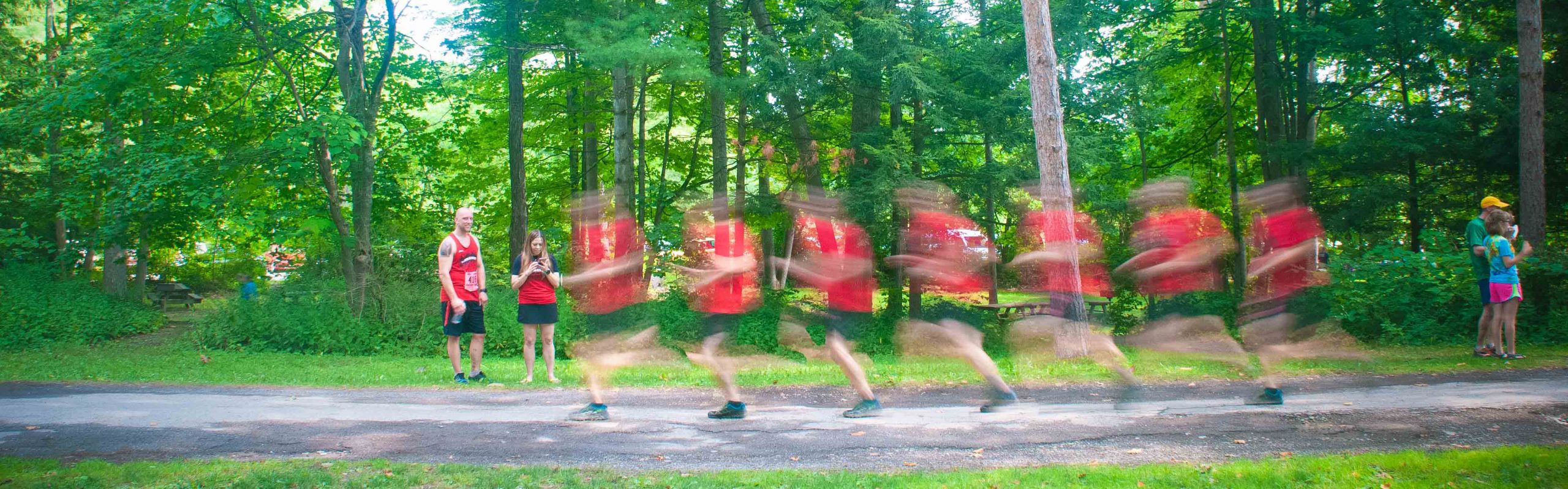
The Evolution Of My Photography Gear

Photography tools are ever evolving. Change happens more rapidly now than ever before. The choices you make in the tools you use will shape the photography you create.
In my last blog post I talked about some of the first tools I ever used to create photography. In this post I will talk more about the gear I have used to develop my photography after I began to fall in love with photography.
The first camera I bought for myself was an Olympus 35mm film camera. The camera came with two kit lenses. One lens was a telephoto zoom lens. The other lens was a wide angle zoom lens. When I look back on my time with this film camera I can’t believe I was limited to only a few images per roll of film and now I can take almost unlimited images without pause. But, I did have some fun times with this camera.

My emergence into photography coincided with the emergence of digital cameras as a more main stream technology. And soon I would delve into that world.
First digital cameras
I started off in the digital photography realm with a Nikon D50. Then I eventually added a Nikon D60 to the mix. The D60 was a more compact version, which I liked. And the search for compact would come back into relevance later in my photography.
In using the D50 and the D60 I was mostly using the kit lenses that came with the cameras. Most kits include a telephoto zoom and a wide angle zoom. Either lens can be very useful. But I had a wide array of interests in photography and I never wanted to commit to one type of photography. I usually carried both camera bodies. One camera would have the telephoto lens and the other camera body would have the wide angle lens. Now I could be ready for whatever subjects I decided to photograph while I was out.

As photography began to occupy more of my time and I started to read and learn more about it I developed an understanding of what I wanted to photograph and the type of equipment that would allow me to do that best.
Planning the gear I needed
I wanted to photograph wildlife. Wildlife can be fast moving and can be far away. So I needed a few considerations. A telephoto lens with a relatively wide aperture. I ended up getting a Nikon 300mm f4. And I paired that lens with a 1.4 teleconverter to gain greater reach. I also added a Nikon D300 to my toolkit. I added that camera because it would allow me to shoot at a much higher rate of frames per second. The change was going from around 3 frames per second to around 10 frames per second. Now I could photograph wildlife without missing so much of the action.
I also liked photographing landscapes. So I eventually added a do everything Tamron 18-200mm zoom lens. I don’t think I fully understood how useful this lens would be at the time, nor how much I would fall in love with photographing all varieties of landscapes and scenery.

Eventually as gear broke down I added a Nikon D300s to replace an old body. Then I also added a Nikon 60mm f2.8 macro lens. I know I never anticipated using this lens as much as I do today. Macro photography has really grown on me and I love it. I also in my initial phase of adding gear to my toolkit added a Nikon 70-200mm f2.8 lens. I think of this as my portraiture lens even though I don’t actually shoot traditional portraiture. I use the 70-200 lens to photograph dogs and running events primarily. It is probably the lens I use the least and the one I use for the most specific of scenarios.
Replacements and additions
Eventually, my Nikon D300 wore out and I had to replace it. I replace the D300 with a Nikon D500. the biggest upgrade in relevance to me from the 300 to the 500 was the number of frames per second I can shoot. It was a jump of around 1.5 to 2 times as many frames per second with the new camera. This was an eye opener as I began to capture amazing series of action shots of wildlife and athletes using this camera.

I still currently use my Nikon D300s and my Nikon D500 camera bodies, and I will likely continue to do so until one stops working. Hopefully I did not just jinx myself. And I still use Nikon 300mm, 70-200mm, 60mm lenses and the Tamron 18-200mm. I also have a Nikon 50mm f1.8 that I love to take along for hikes in the deep dark woods when there is low light. But I have been using roughly the same gear for well over a decade.
A shift in life shifts photography
When I started running that is what created the biggest shift in the way I approach photography for certain projects. I began trail running and getting farther out into the woods to explore new places on the move inspired me to try to capture these adventures. So I needed a whole different set-up for that. I needed smaller, nimbler tools. Camera gear I could easily carry, access, and use on the go.
To that end I added a series of GoPro cameras that were upgraded as the technology showed significant improvements. These are great for captures photos while literally on the move. I also added two Nikon mirror-less cameras that we compact and could fit in the pocket of a running vest. These were prior to Nikon developing the Z line of mirrorless lenses. There was a significant learning curve that included two broken lenses because I dropped a camera out in the woods when stopping for a quick photo.

As I continue to iterate on this quick on the go style of photography I added a SONY Alpha 6000 many years after it was first released. But I wanted it because it was the smallest main stream mirrorless camera I could find for on the go shooting. I paired it with a SONY 20mm f2.8 lens that is tiny. Now I have an on the go set up that can work in low light. It hasn’t worked out as great as I would liked for photography while running, but it has been great for photography while out hiking and a host of other uses. It is by far the set up I use the most now when I am on the go.
Have gear for a reason
All the camera gear I use has a specific purpose and use case for me. I try not to buy gear that does not enhance the photography that I do or serve a specific purpose in allowing me to create the photography that I want to create. I don’t buy new gear just to get the latest updates. I like the familiarity of the gear I own. Learning how to use gear slows down the process of learning to create art.
If you enjoyed this article you can click the link below to support the work I do here or subscribe to my email so you don’t miss out in anything I share.
